
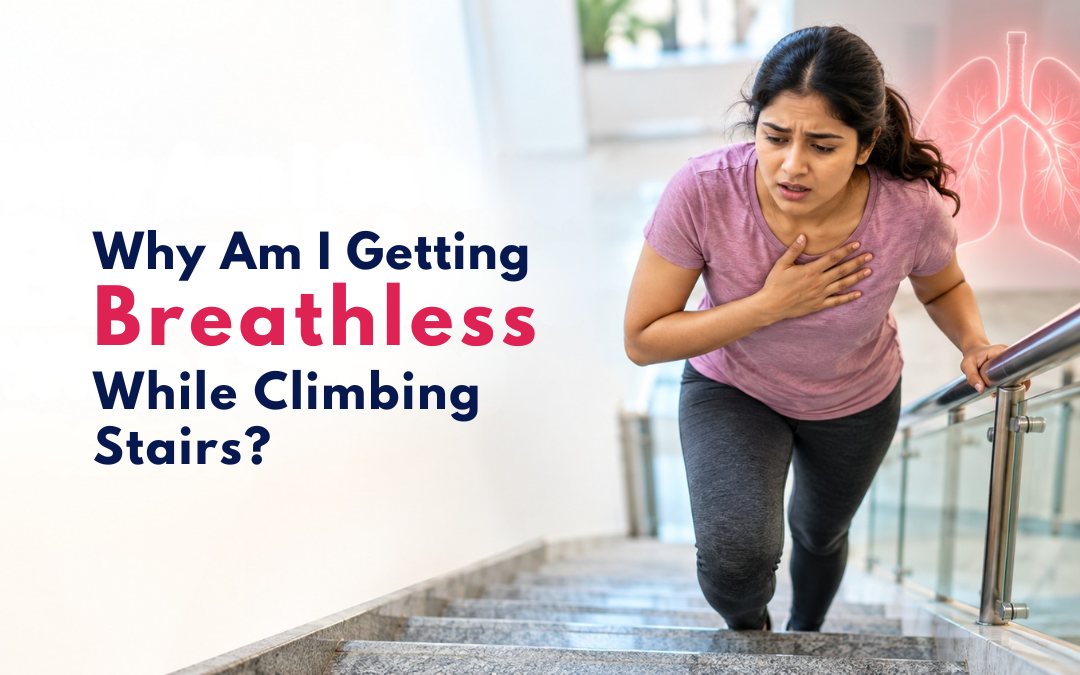
Quick Answer
Breathlessness after strenuous activity can be normal, particularly if you are not physically active. However, getting unusually breathless while climbing stairs can sometimes be related to heart disease, lung conditions, anemia, or other health problems. If the breathlessness is new, worsening, or associated with chest discomfort, dizziness, palpitations, or unusual fatigue, it should be evaluated.
Why Do Stairs Make You Breathless?
Climbing stairs requires more energy than walking slowly on a flat surface. Your muscles need additional oxygen, so your breathing and heart rate naturally increase.
If you are physically inactive, overweight, or not used to exercise, you may become breathless more quickly.
But there is a difference between expected breathlessness after exertion and breathlessness that is out of proportion to the activity.
For example, if you previously climbed two or three floors comfortably but now become breathless after a few steps, the change should not be ignored.
Can Breathlessness Be Related to the Heart?
Yes.
Some heart conditions can reduce the body's ability to increase blood flow during activity. Problems involving the coronary arteries, heart muscle, heart valves, or heart rhythm can sometimes cause breathlessness.
Heart-related breathlessness may occur along with:
- Chest pressure
- Unusual tiredness
- Palpitations
- Dizziness
- Reduced exercise tolerance
- Swelling of the legs or feet
Some people may experience breathlessness as the main symptom rather than obvious chest pain.
What Other Conditions Can Cause Breathlessness?
Breathlessness is not always related to the heart.
Possible causes include:
- Asthma
- Chronic lung disease
- Respiratory infections
- Anemia
- Obesity
- Poor physical fitness
- Anxiety
- Smoking
- Certain medications
This is why identifying the underlying cause is more important than simply treating the symptom.
When Should You See a Doctor?
Make an appointment if your breathlessness:
- Is new or getting worse
- Happens with less activity than before
- Occurs repeatedly
- Limits your normal activities
- Happens together with palpitations or chest discomfort
Seek urgent medical attention for sudden severe breathlessness, especially when accompanied by chest pain, fainting, blue lips, severe weakness, or confusion.
How Is the Cause Checked?
Your doctor may ask about your symptoms, activity level, medical history, smoking history, and risk factors such as diabetes, high BP, or cholesterol.
Depending on the situation, tests may include:
- Blood pressure measurement
- ECG
- Blood tests
- Echocardiogram
- Chest imaging
- Lung function testing
- Stress testing
Further testing is based on the initial findings.
FAQs
Is it normal to feel breathless after climbing stairs?
Mild breathlessness after strenuous activity can be normal. Excessive or newly developed breathlessness should be evaluated.
Can heart disease cause breathlessness without chest pain?
Yes. Some people with heart problems mainly experience breathlessness or reduced exercise tolerance.
Can lack of exercise cause breathlessness?
Yes. Poor physical conditioning can make ordinary activities feel more demanding.
Conclusion
Breathlessness while climbing stairs does not automatically mean you have heart disease. However, a noticeable change in your exercise capacity is worth discussing with a doctor, particularly when other symptoms are present.