
Quick Answer
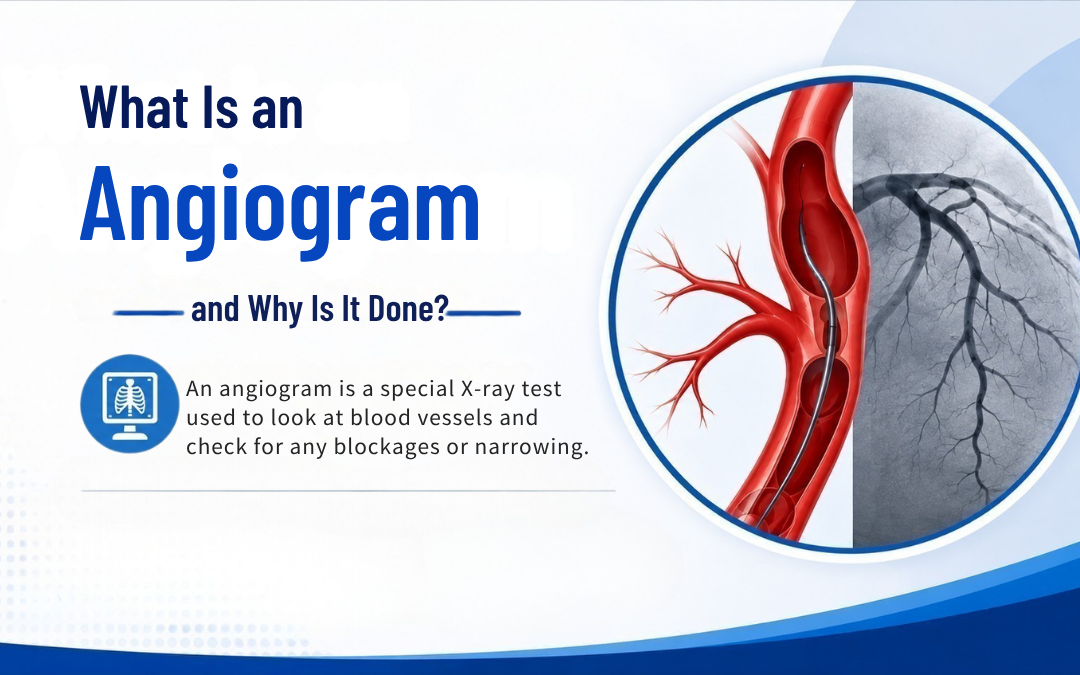
An angiogram is a diagnostic test that uses X-ray imaging and a special contrast dye to examine the blood vessels supplying the heart. It helps doctors detect blocked or narrowed arteries, identify heart disease, and determine the most appropriate treatment, such as medication, angioplasty, or bypass surgery.
What Is an Angiogram?
An angiogram, also called coronary angiography, is a medical procedure used to check how well blood flows through the arteries of the heart.
During the procedure, a thin tube called a catheter is inserted through a blood vessel in the wrist or groin. A special dye is then injected into the arteries, allowing doctors to clearly see any blockages or narrowing on X-ray images.
An angiogram is considered one of the most accurate tests for diagnosing coronary artery disease.
Why Is an Angiogram Done?
A cardiologist may recommend an angiogram if you have symptoms or test results that suggest reduced blood flow to the heart.
Common reasons include:
Chest Pain (Angina)
Persistent chest pain or discomfort may indicate blocked heart arteries.
Shortness of Breath
Difficulty breathing during physical activity or even at rest may be related to heart disease.
Abnormal ECG or Stress Test
If an ECG, TMT, or other heart tests show abnormal results, an angiogram may be recommended for further evaluation.
Suspected Heart Attack
An emergency angiogram helps locate blocked arteries and guide immediate treatment.
Before Heart Surgery
Doctors may perform an angiogram before bypass surgery or valve replacement to evaluate the heart's blood vessels.
High Risk of Heart Disease
Patients with diabetes, high cholesterol, high blood pressure, or a strong family history of heart disease may require an angiogram if symptoms are present.
How Is an Angiogram Performed?
The procedure generally follows these steps:
- Local anesthesia is given to numb the insertion area.
- A thin catheter is inserted through the wrist or groin artery.
- Contrast dye is injected into the coronary arteries.
- X-ray images are taken to identify blockages or narrowing.
- The procedure usually takes 30 to 60 minutes.
Most patients can return home the same day or after a short observation period.
Benefits of an Angiogram
Accurate Diagnosis
Provides a clear view of blocked or narrowed coronary arteries.
Early Detection
Identifies heart disease before serious complications occur.
Treatment Planning
Helps doctors decide whether medication, angioplasty, or bypass surgery is needed.
Prevents Heart Attacks
Early diagnosis allows timely treatment, reducing the risk of future heart attacks.
Minimally Invasive
The procedure is performed through a small catheter without major surgery.
Is an Angiogram Safe?
Yes. An angiogram is generally a safe and commonly performed procedure when carried out by experienced cardiologists.
As with any medical procedure, there is a small risk of complications, but serious problems are uncommon. Your doctor will discuss the risks and benefits based on your individual health condition.
FAQs
What is an angiogram used for?
An angiogram is used to detect blocked or narrowed arteries and diagnose coronary artery disease.
Is an angiogram painful?
No. The procedure is usually performed under local anesthesia, and most patients experience only mild discomfort.
How long does an angiogram take?
Most angiograms are completed within 30 to 60 minutes.
Can I go home after an angiogram?
Yes. Many patients are discharged on the same day, depending on their condition and the doctor's advice.
What happens if a blockage is found?
If a significant blockage is detected, your cardiologist may recommend medications, angioplasty with stent placement, or bypass surgery.
Who should undergo an angiogram?
People with chest pain, abnormal heart test results, suspected heart attacks, or symptoms of coronary artery disease may require an angiogram.
Conclusion
An angiogram is one of the most effective diagnostic procedures for identifying blocked heart arteries and evaluating blood flow to the heart. It helps cardiologists diagnose heart disease accurately and determine the most suitable treatment plan.
If you experience chest pain, shortness of breath, or other symptoms of heart disease, consulting a cardiologist and undergoing timely evaluation can help prevent serious complications.
Looking for advanced cardiac diagnosis in Hyderabad? Book an appointment with our experienced cardiologist for expert angiogram evaluation and comprehensive heart care.