
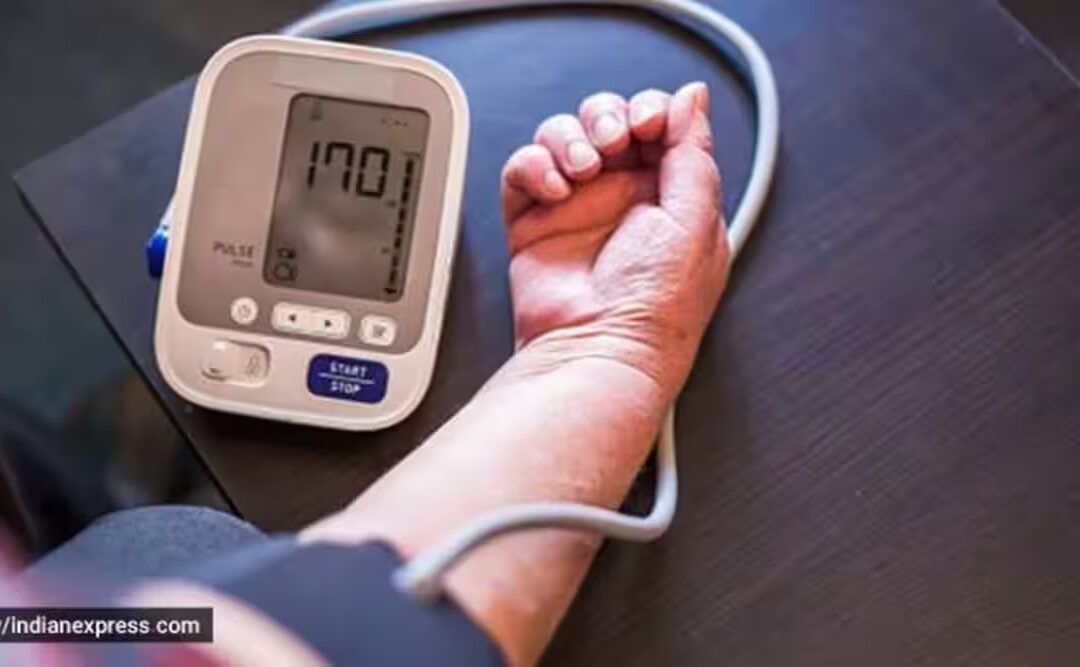
Dr Deepak Sharma, Consultant Pulmonologist, Ujala Cygnus Group of Hospitals, added that monitoring your blood pressure levels at home allows patients to actively participate in managing their health, identify potential fluctuations and make informed decisions about lifestyle changes or medication adjustments.
Recently, the number of people who have been falling victim to cardiovascular diseases has risen dramatically. According to the “Accidental Deaths & Suicides in India” (ADSI) report compiled by the National Crime Records Bureau (NCRB), the number of deaths occurring due to cardiovascular diseases in India has remained over 28,000 in the past three years.
Dr Jagadesh Madireddi, Consultant Cardiologist, Yashoda Hospitals Hyderabad, said monitoring blood pressure at home allows for better cardiovascular health by keeping track of your heart health without frequent visits to the hospital.
Dr Abhinit Gupta, Consultant Cardiologist, Regency Hospital Ltd, emphasised its importance for individuals with hypertension, also known as high blood pressure (BP) as they can keep track of their condition and assess the effectiveness of their treatment.
Monitoring over time helps identify changes early and taking prompt action, if necessary. Home measurements tend to be more accurate too, according to Dr Madireddi, due to increased relaxation.
Dr Deepak Sharma, Consultant Pulmonologist, Ujala Cygnus Group of Hospitals, added that monitoring your BP levels at home also allows patients to actively participate in managing their health, identify potential fluctuations, and make informed decisions about lifestyle changes or medication adjustments.
Here’s how to measure your blood pressure at home based on the device you own.
How to measure your BP at home
With an automated cuff
Dr Gupta said measuring your BP with an automated cuff at home is simple and convenient, all you need to do is follow these steps.
Step 1: Rest for at least 5 minutes in a quiet environment before measurement.
Step 2: Sit comfortably with your feet flat on the floor and your back supported.
Step 3: Place the cuff on your upper arm, following the manufacturer’s instructions for proper positioning.
Step 4: Press the start button on the automated blood pressure monitor to begin the measurement.
Step 5: The cuff will inflate and then slowly deflate while the monitor displays your blood pressure readings.
Step 6: Take note of both the systolic (higher number) and diastolic (lower number) readings.
Step 7: Repeat the measurement two more times, waiting a few minutes between each reading, and calculate the average for more accurate results.
Step 8: Record the readings in a log or use any associated smartphone apps to track your blood pressure over time.
With a manual cuff
Measuring blood pressure manually using a blood pressure cuff with a squeezable balloon requires careful attention to detail, Dr Sharma said. Here are the steps.
Step 1: Sit or lie down comfortably in a relaxed position with your arm lying supported at heart level.
Step 2: Place the cuff on your upper arm, about an inch above the elbow. Ensure it fits snugly but not too tight.
Step 3: Locate your radial artery on your wrist and palpate it with your fingers.
Step 4: Close the air release valve on the rubber bulb by turning it clockwise.
Step 5: Squeeze the rubber bulb to inflate the cuff while simultaneously palpating your radial artery.
Step 6: Continue squeezing until you can no longer feel your pulse in the wrist.
Step 7: Slowly release the pressure in the cuff by turning the air release valve counterclockwise.
Step 8: Listen for the first heartbeat (systolic pressure) using a stethoscope placed over your brachial artery (inside of your elbow).
Step 9: Keep listening for the sound of the heartbeat, which will eventually disappear (diastolic pressure).
Step 10: Note the pressure reading on the gauge when you first hear the heartbeat (systolic) and when the sound disappears (diastolic).
Step 11: Wait a few minutes, then repeat the measurement two more times, calculating the average for more accurate results.
What do your BP levels say about your health
Blood pressure readings provide essential information about the force of blood against the walls of the arteries as the heart pumps blood. According to Dr Gupta, a normal or healthy blood pressure range indicates a well-functioning cardiovascular system and a lower risk of cardiovascular diseases.
Explaining systolic and diastolic pressure, Dr Madireddi said, systolic pressure (higher number) is when your heart contracts, while diastolic pressure (lower number) is when your heart relaxes. “While the normal range is around 120/80 mmHg, higher readings signal hypertension or prehypertension, needing attention and lifestyle changes to lower risks.”
According to Dr Sharma, elevated blood pressure (prehypertension) falls between 120-129/80 mmHg, while hypertension is defined as a blood pressure reading consistently at or above 130/80 mmHg.
Regularly monitoring blood pressure helps individuals and healthcare providers identify potential health issues and make informed decisions regarding treatment and lifestyle modifications.